





Book a demo
Computer vision for manual work in manufacturing

One camera. Every action. Every deviation.

Operator Vision captures every action at a manual station and flags speed deviations, quality deviations, and the actions that put production at risk. The operator gets guidance in real time. Engineering gets visibility across every station and every shift.

Book a demo
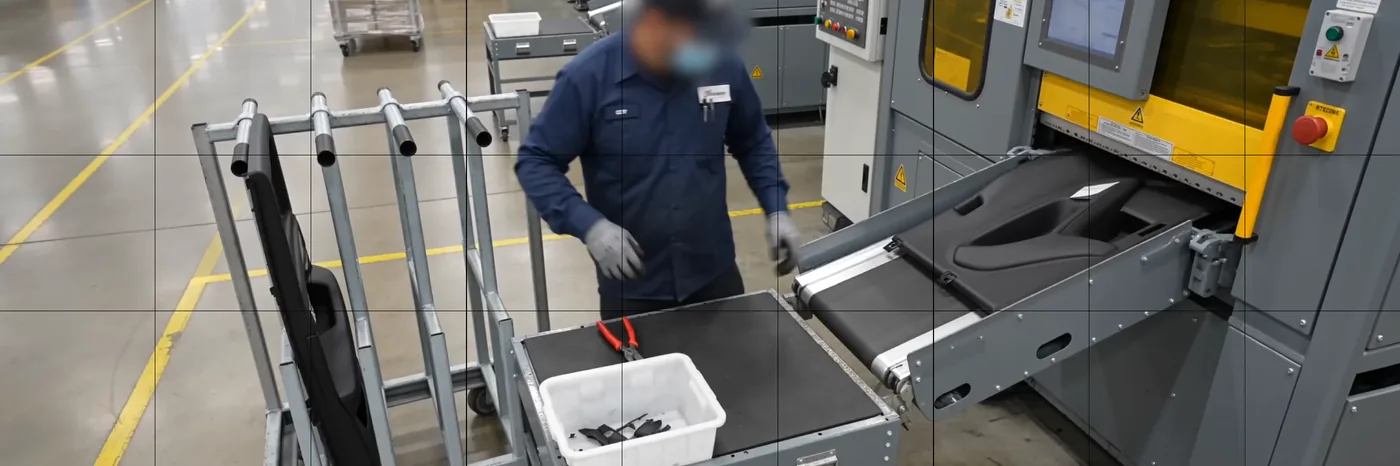
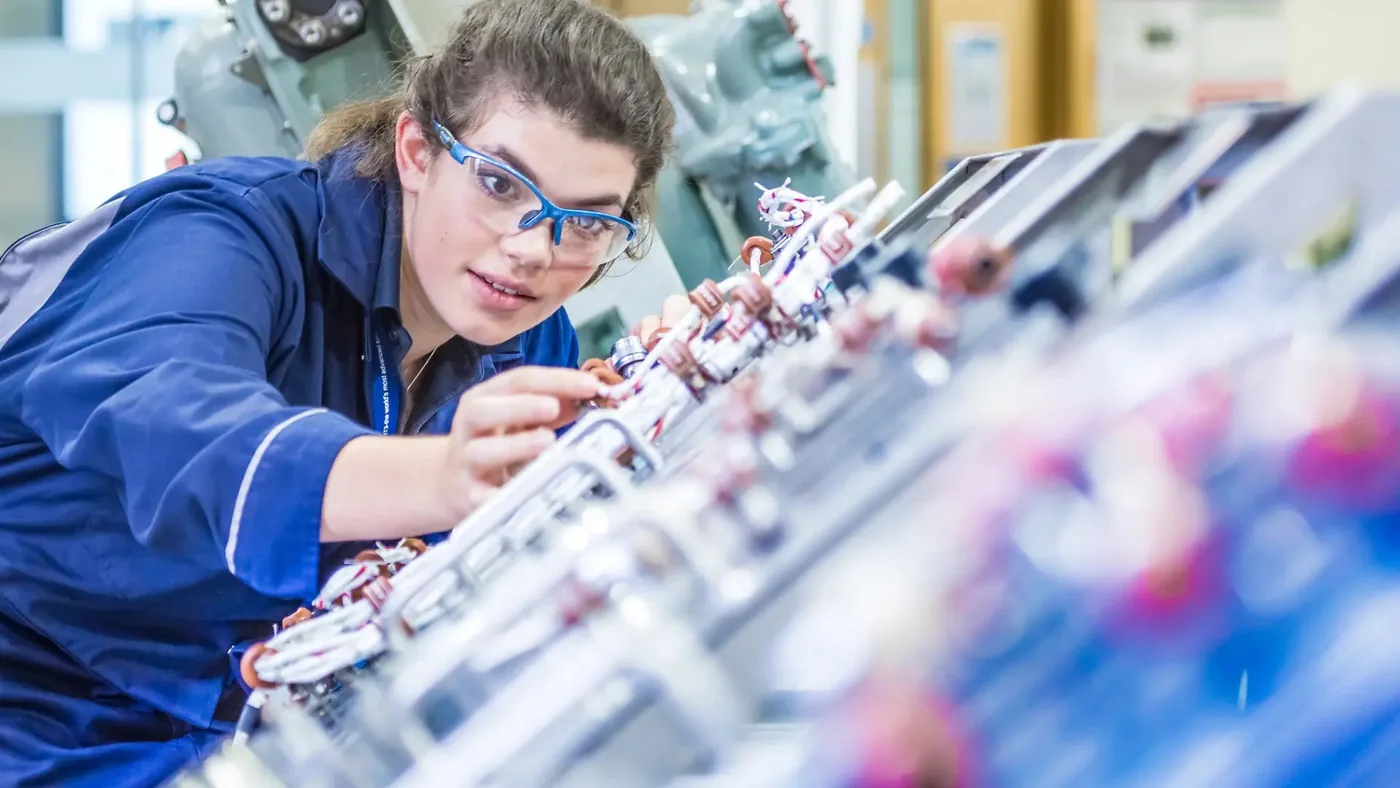
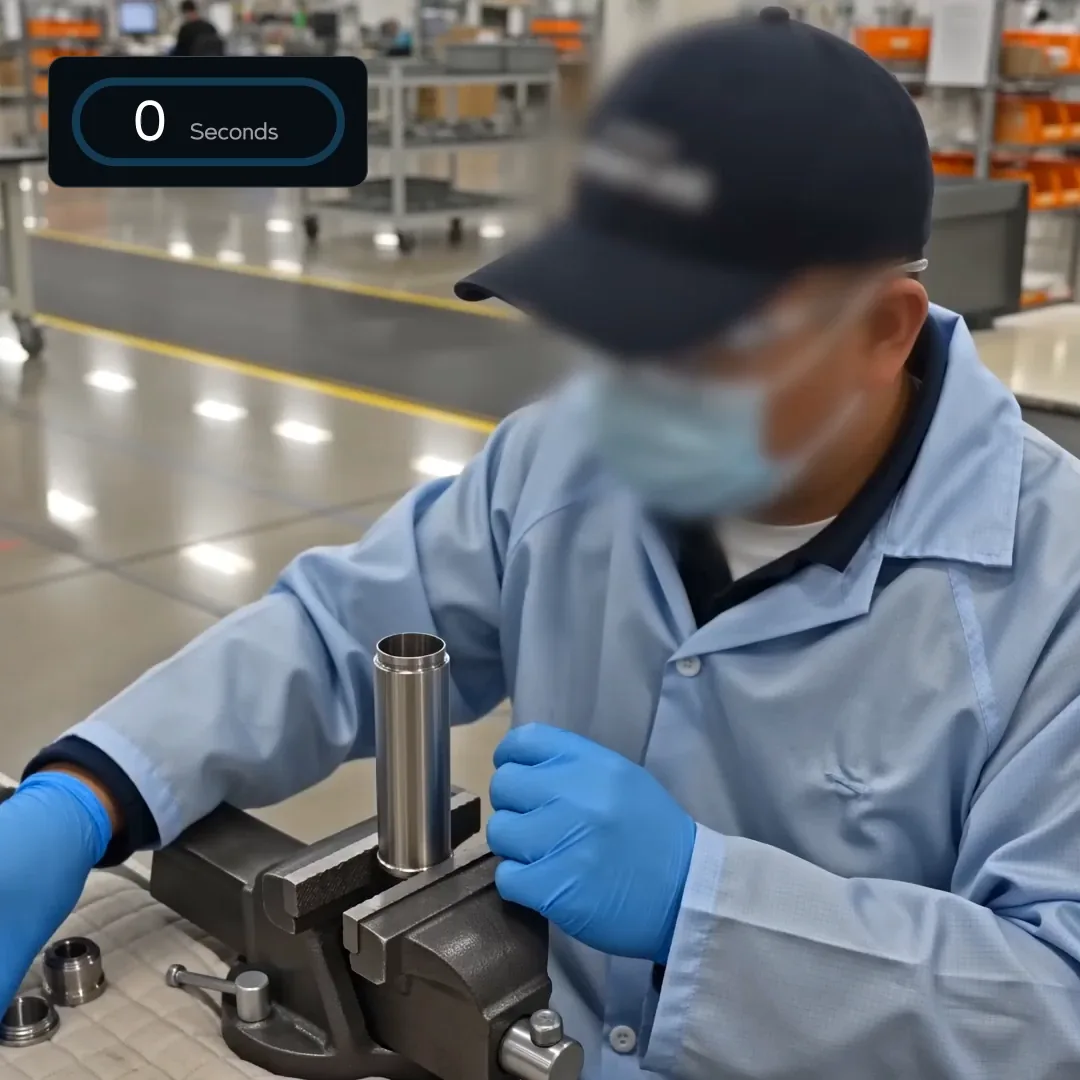
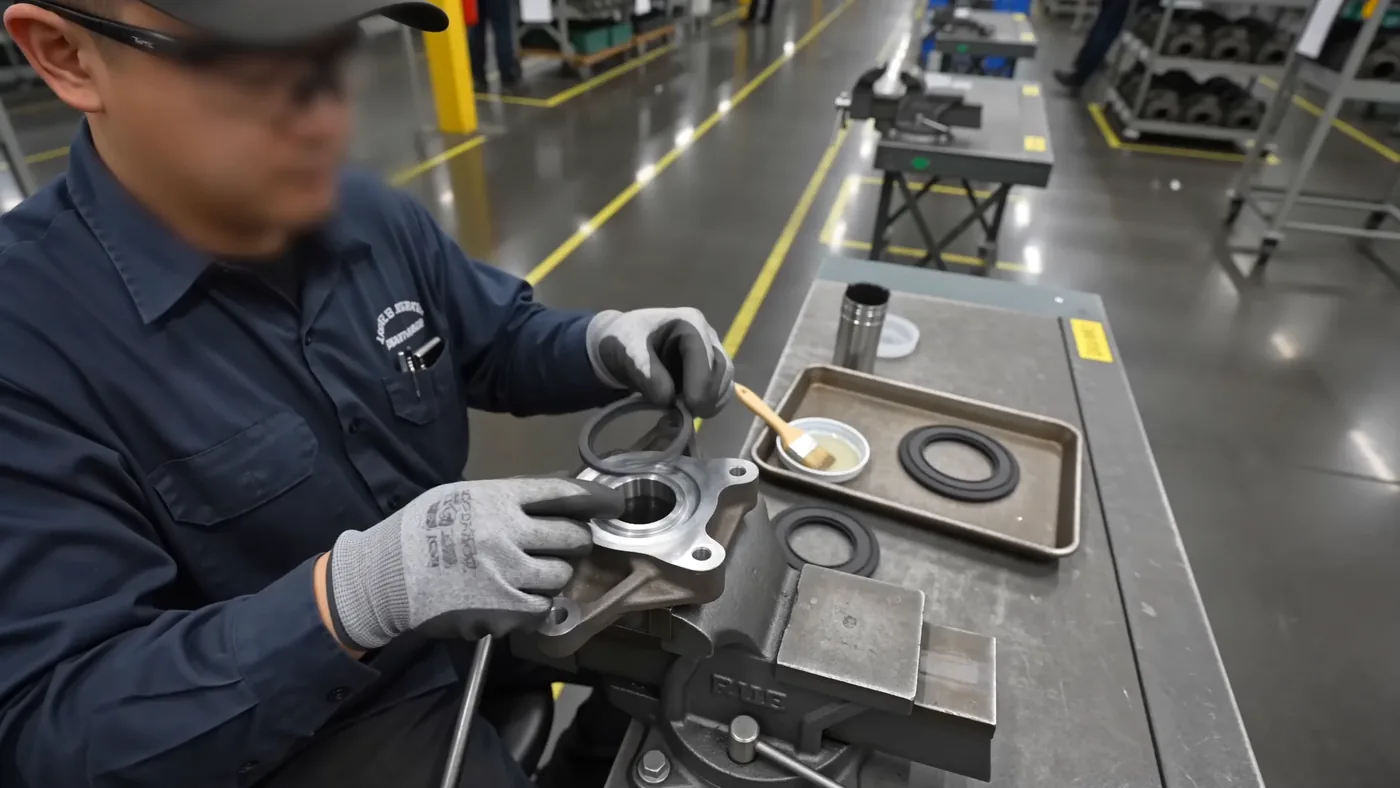
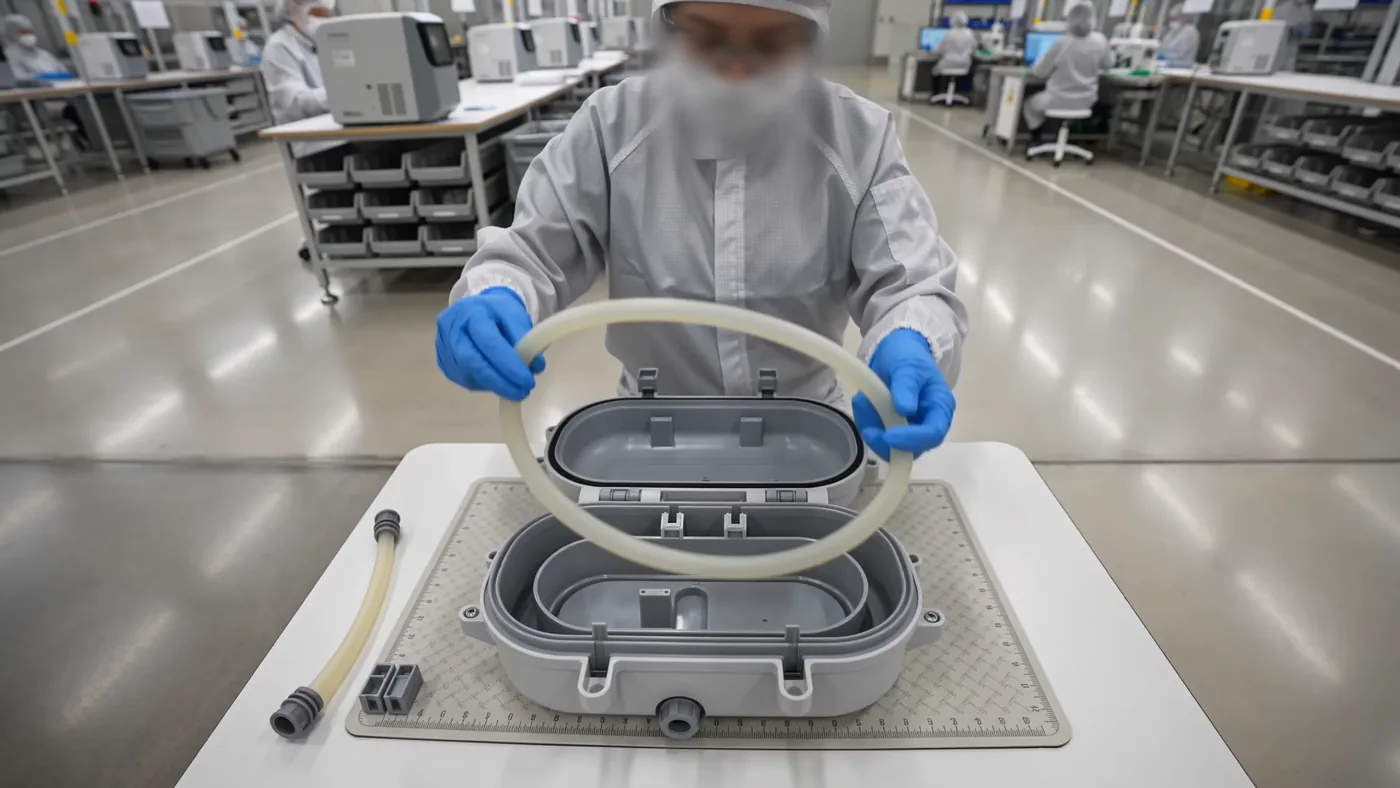
Manual assembly stations seen through the Operator Vision camera
Missed Steps
Wrong parts
Slow Cycles
Bottlenecked Line
Role router

Start where you sit

  • Quality

    The missed step, caught and fixed at the bench instead of at final test

  • Continuous improvement

    Cycle times for every step, without running a study

  • Operations leadership

    Every station and every shift on one screen

  • Operators and production managers

    New operators up to speed faster, and your best method becomes the standard

Problem

The floor doesn’t run the way the SOP says it does

Not because your operators are careless. Because every operator finds their own way through a build, and nobody can stand at every station and watch.

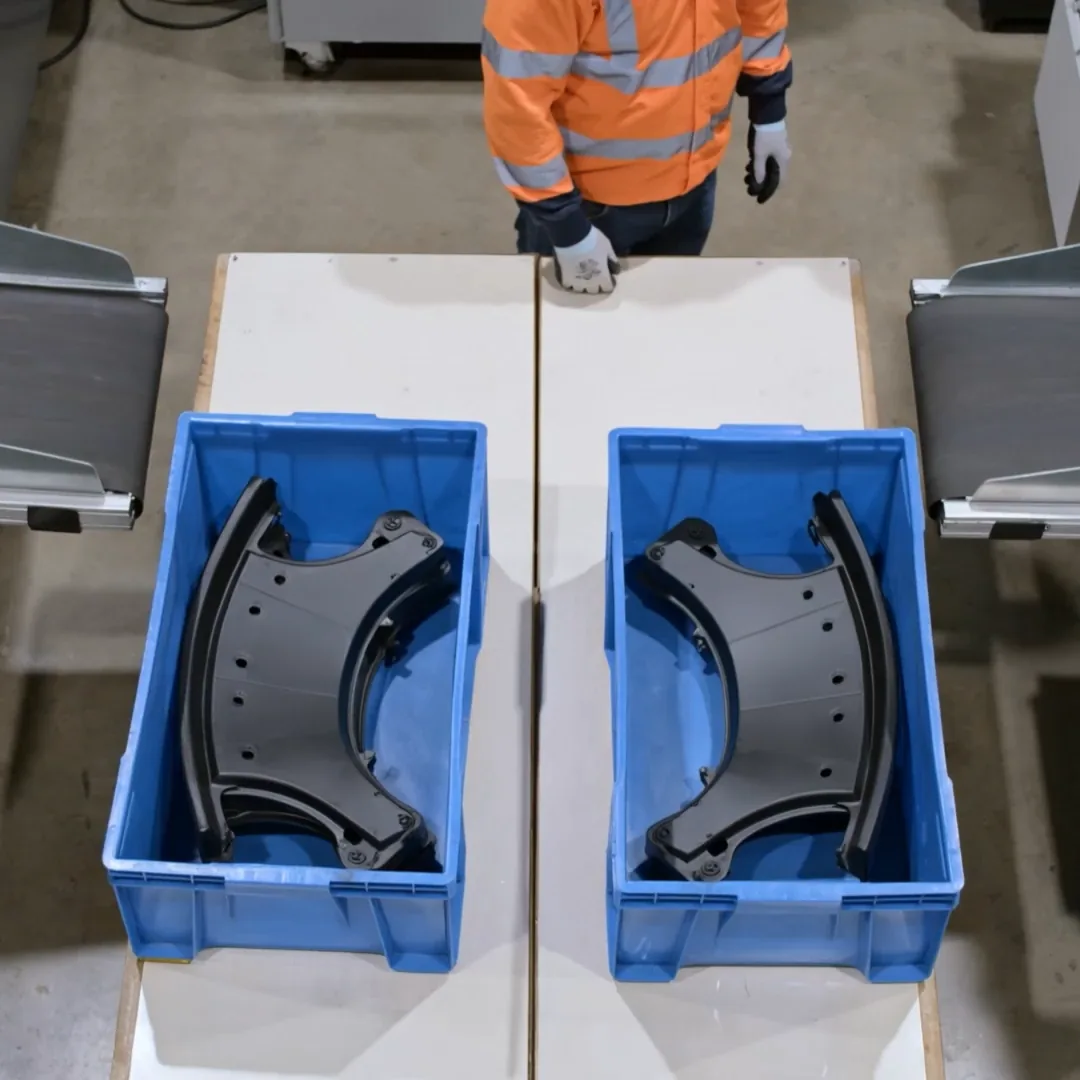
So the gap opens quietly. A step gets skipped. An inspection that should take three seconds takes one. A left-hand part goes into a right-hand box. You find out at final test, or your customer finds out for you.

Whichever job you hold, the same blind spot costs you something different.

Continuous improvement
Loses the data
Quality
Finds out too late
Operations
Loses the hours
Products

Every cycle checked

Assembler AI builds Operator Vision, a computer vision platform for manual work in manufacturing. One camera, one platform, four modules reading the same feed.

  1. Real-Time Quality Alerts

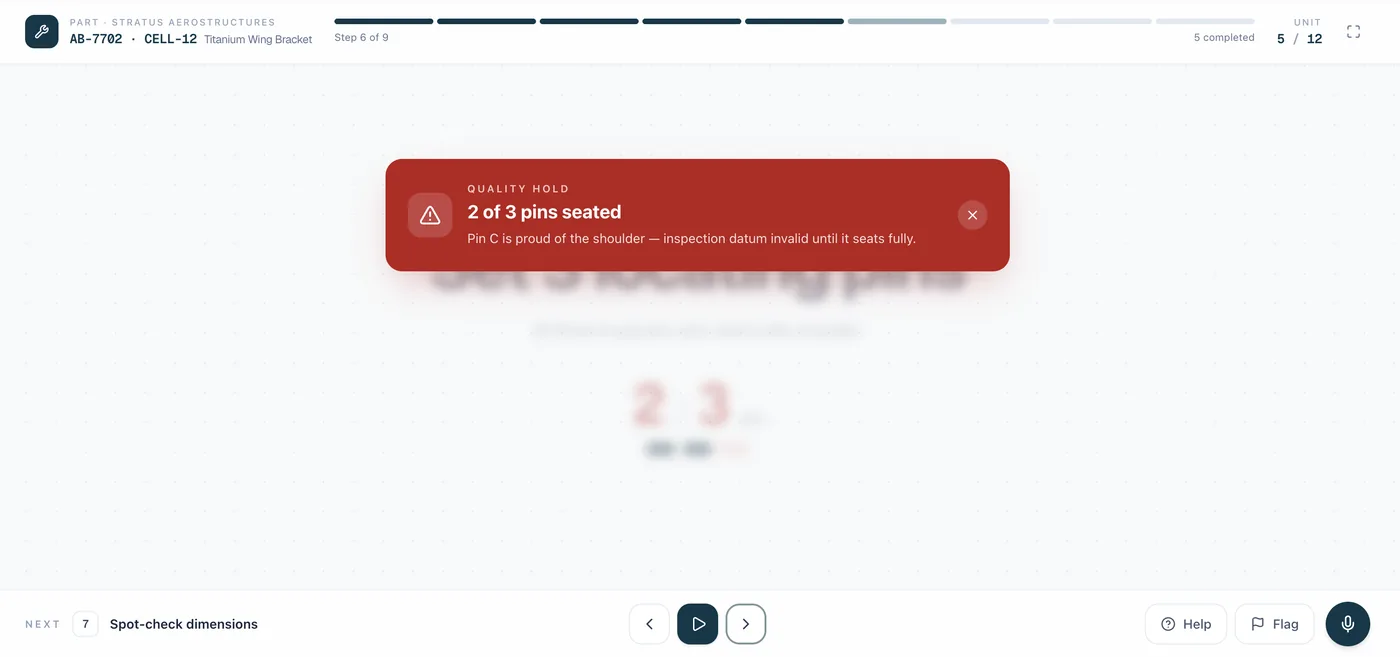
    A missed step, a wrong part, or a broken sequence, flagged the moment it happens, with the video attached.

    Explore
  2. Continuous Improvement Insights

  3. Real-Time Operator Guidance

  4. Real-Time Risk Detection

  • Real-Time Quality Alerts
  • Continuous Improvement Insights
  • Real-Time Operator Guidance
  • Real-Time Risk Detection
How it works

One camera, your existing work instructions, live in two weeks

  1. [ Day 1 ]

    Send your work instructions

    You send the work instructions you already have. Operator Vision reads it and learns the steps, tools, and parts for that station.

  2. [ Week 1 ]

    Install the camera

    The camera goes up. Off-the-shelf, NDAA-compliant hardware we supply and provision. Nothing about the line changes. The camera sits on its own subnet and streams out over an encrypted VPN, so the only thing your IT team has to open is one outbound path.

  3. [ Week 2 ]

    Calibrate the system

    We calibrate. The system records before it alerts, then we work through anywhere the footage and the document disagree. Sometimes the operator is right and the SOP is years out of date.

  4. [ Day 15 ]

    Go live with alerts

    Alerts go live against a standard everyone in the room signed off on. We tune them with you from there.

Built for four people on your floor

One camera, your existing work instructions, live in two weeks

The missed step,
caught and fixed at the bench

You don't find out something was skipped until the end. By then it's a rework loop, a batch to sort, or a call from a customer who found it first.

Most of it starts with a hand. The American Society for Quality puts the cost of quality failures at around fifteen percent of revenue, and on manual lines the largest share of that traces back to execution rather than to suppliers or design.

Operator Vision checks sequence and execution on every cycle. Missing components, steps run out of order, wrong part, wrong tool, wrong label on the carton, a left-hand part going into a right-hand box. Operator Vision also enforces the checks that get short-changed when parts stack up: minimum inspection dwell time, no skipped gauge check.

When something fires, the alert reaches the bench first, so the operator gets the chance to fix it while the piece is still at the station. You get the video attached. Root cause analysis that used to hold a room until eight at night resolves in minutes.

Feature: work instruction adherence checks and deviation rules with video evidence

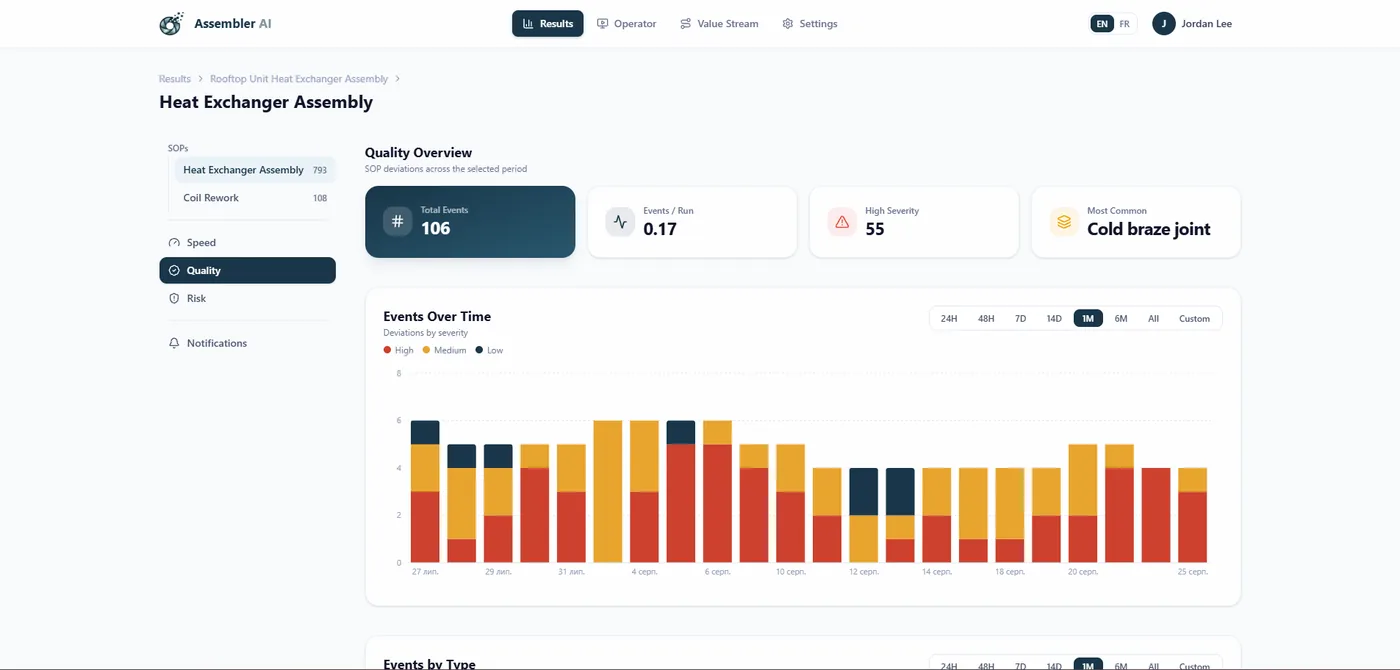
Operator Vision quality dashboard
INDUSTRIES

Any station where the work is done by hand

Four industries where high-value work runs through human hands.

  • Aerospace and defense

    Aerospace and defense

    Zero tolerance, redundant inspection, and a backlog your executives ask about weekly.

    See aerospace
  • Automotive components

    Automotive components

    Your customer catches everything, so every escape is a complaint by Tuesday.

    See automotive
  • Medical devices

    Medical devices

    High-sensitivity parts built under GMP, where a piece off the floor never goes back on the line.

    See medical devices
  • HVAC

    HVAC

    High mix, thin margins, configurations that change by the order.

    See HVAC
WORKSTATIONS

Any station where the work is done by hand

  • 01Assembly

    Sequence, fasteners, missing components, wrong part.

    View
  • 02Inspection

    Dwell time, both sides of the part, automatic scrap and pass counts.

    View
  • 03Injection molding

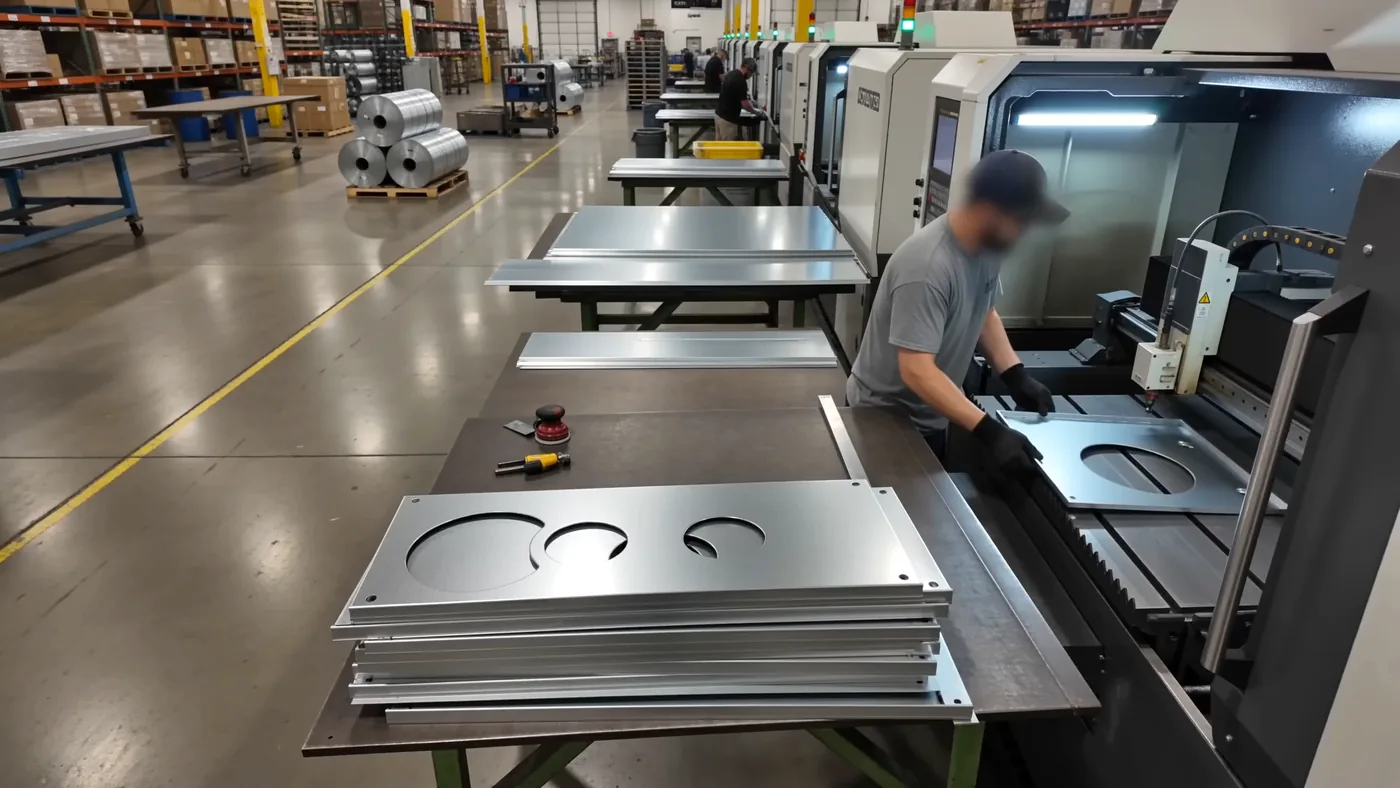
    Sprue cut, inspect, bag, label, correct box, every cycle.

    View
  • 04CNC machining

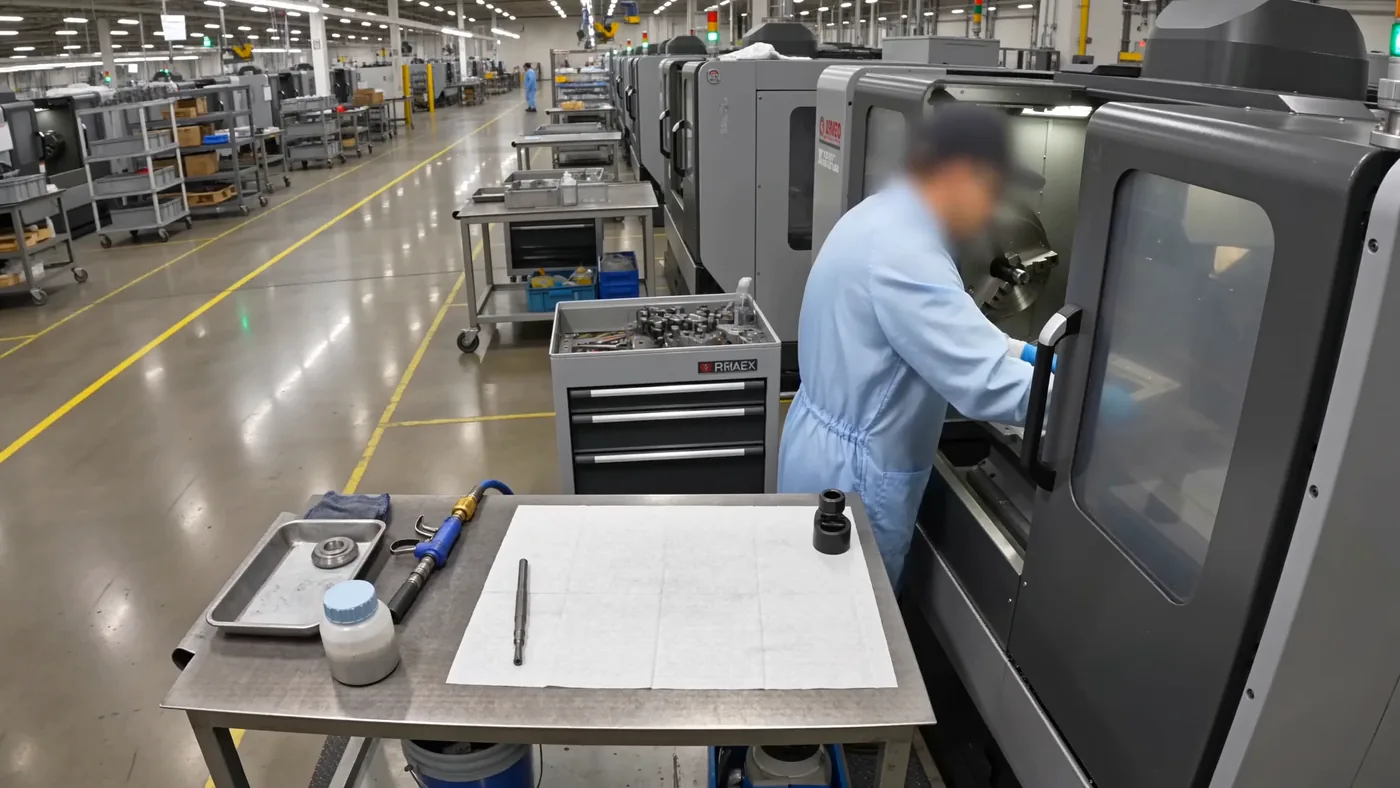
    Setup, tool change, orientation, measurement, deburr, final check.

    View
Proof

What the numbers say

$23m
step-labeling accuracy on a live customer station
50–70%
of scrap traced to operator error at high-mix, low-volume manufacturers
15–30%
of throughput lost to drift from the standard
2 wks
from work instructions to a live station, the commitment Assembler AI makes on every deployment
Mission

Built to accelerate North American manufacturing

The highest-value goods on the continent get built by hand: aircraft assemblies, medical devices, vehicle components. That work stays in North America on precision and speed, and both live at the workstation. Every station that runs closer to its standard is an argument for building here.

Book a demo
Trust and security

Built to clear your IT review

Camera streams over an encrypted VPN tunnel into the cloud

Your data, your terms

Video streams over RTSP inside an encrypted VPN tunnel, and everything at rest is AES-256 under a customer-managed key issued per tenant. Logically isolated per customer, owned by you. Default retention is twelve months — you can set your own, delete earlier, or export at any time.
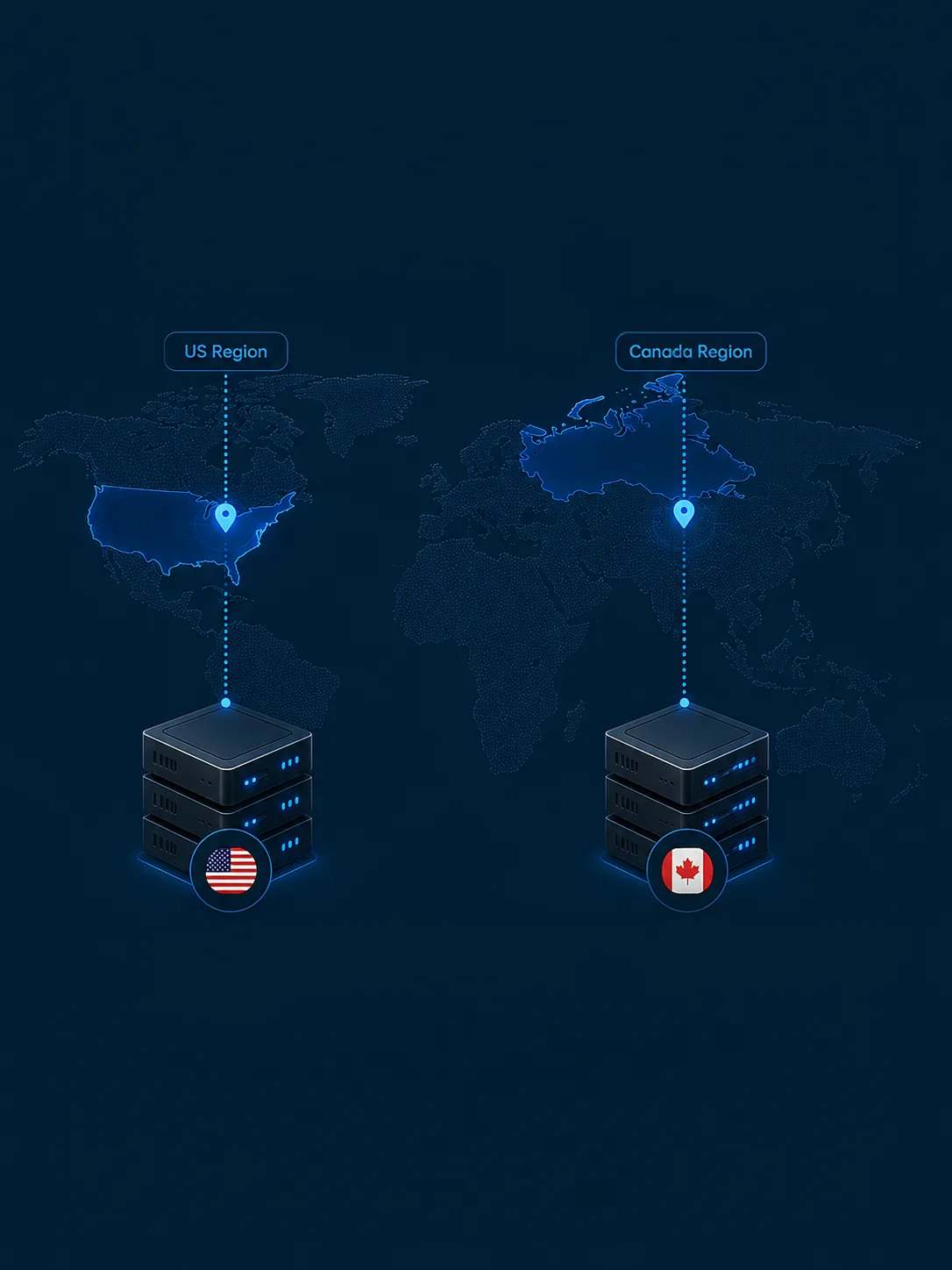
US and Canadian regions

US or Canadian data residency, your choice

You pick the region at deployment. Production data lives there and stays there.

NDAA-compliant camera

Hardware that survives a security review

NDAA-compliant cameras, with no restricted foreign-made surveillance equipment in the stack.

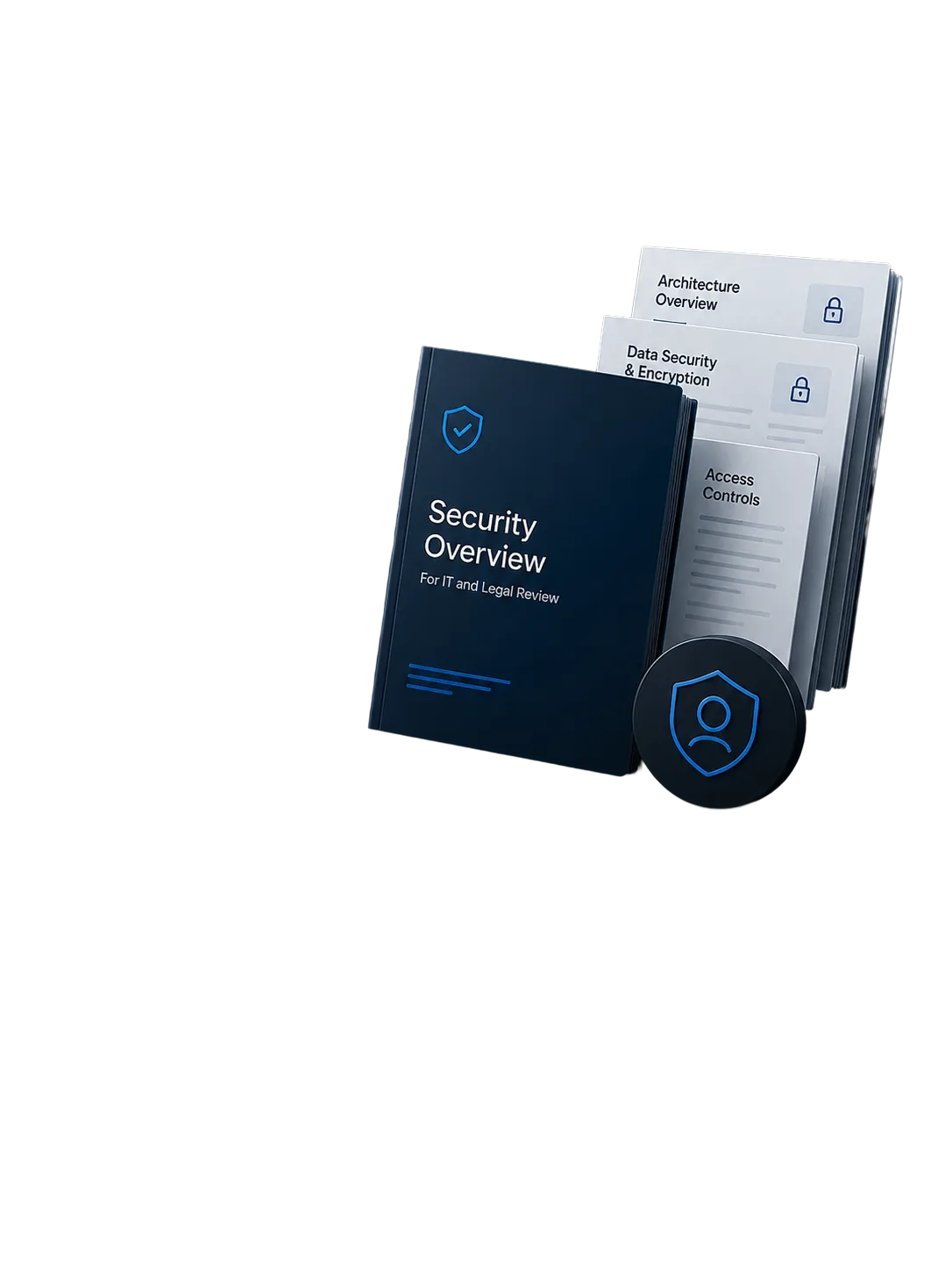
Security overview documents

Documentation written for reviewers

Our security overview goes to IT and legal, not to marketing.

Request it
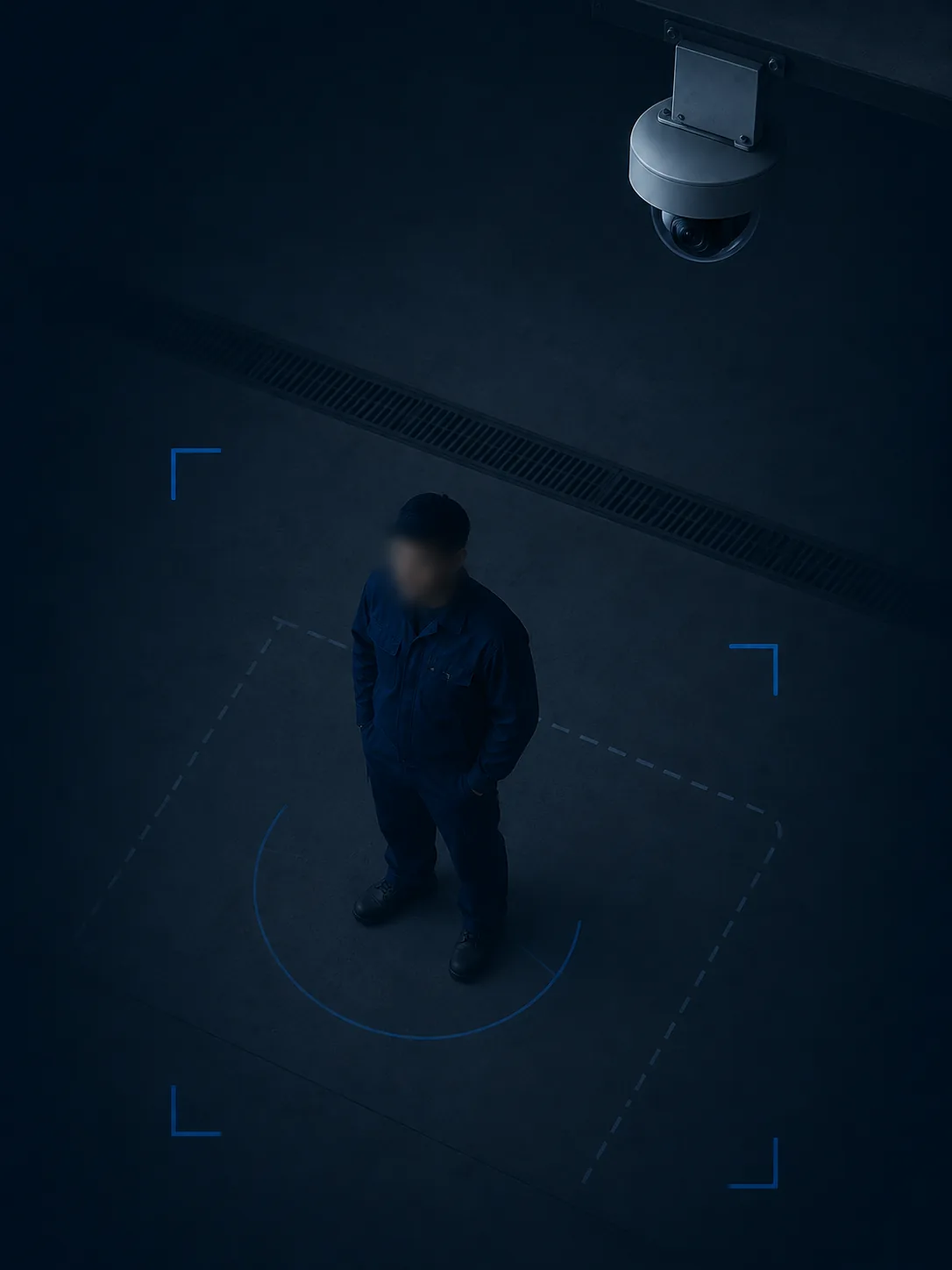
Camera above the shop floor

Unionized environments

Operator Vision runs in unionized plants, with faces blurred and no tracking of individual operators. Assembler AI supports the conversation with your union representatives so everyone sees the same thing before the camera goes up.

Scale

Start with one station. The data gets more valuable with every one you add.

Nobody instruments a whole plant on a vendor’s promise. So you start small, with one station, on the bench that’s costing you most. Two weeks later you have step-level data on your own parts, your own operators, and your own work instructions. That’s a small commitment, and it answers the only question worth asking at the start, which is whether this works on your floor rather than in a demo.

What happens after is the part worth understanding before you begin. This data is comparative, which means every station you add makes the ones you already have more useful. The second station is worth more than the first. The tenth is worth more than the second.

  • One station

    You learn how the work actually happens against how it's written. Step times, the deviations nobody logged, and the ghost steps in your work instructions that no operator has performed in years. On its own that is usually enough to justify the station.

  • The line

    Now you can compare benches running the same work. Variance between operators and between shifts stops being anecdote and becomes a number with video behind it. You find the real constraint, and sometimes you find out it isn't the station everyone assumed.

  • The factory

    Shifts and cells become directly comparable. Why the night shift takes three times as long. Which cell recovers fastest after a changeover. When you make a process change, you can measure it against how that station ran the week before rather than against an impression.

  • Across sites

    The same work in two plants becomes comparable for the first time. Why the same station takes fifty percent longer in one plant than another, with video from both. The best method anywhere in your group becomes the standard everywhere, backed by footage of somebody actually doing it.

That last one is where the arithmetic changes. A single station gives you a number. A factory gives you a distribution. A group of plants gives you a benchmark no consulting study could produce, and unlike a study it keeps updating itself as your work changes. If you’re heading toward multiple sites, tell Assembler AI early and we’ll scope single sign-on, role-based permissions, and per-site data separation with your IT and HR teams while the first station runs.

Alternatives

How Operator Vision differs from what you’ve already tried

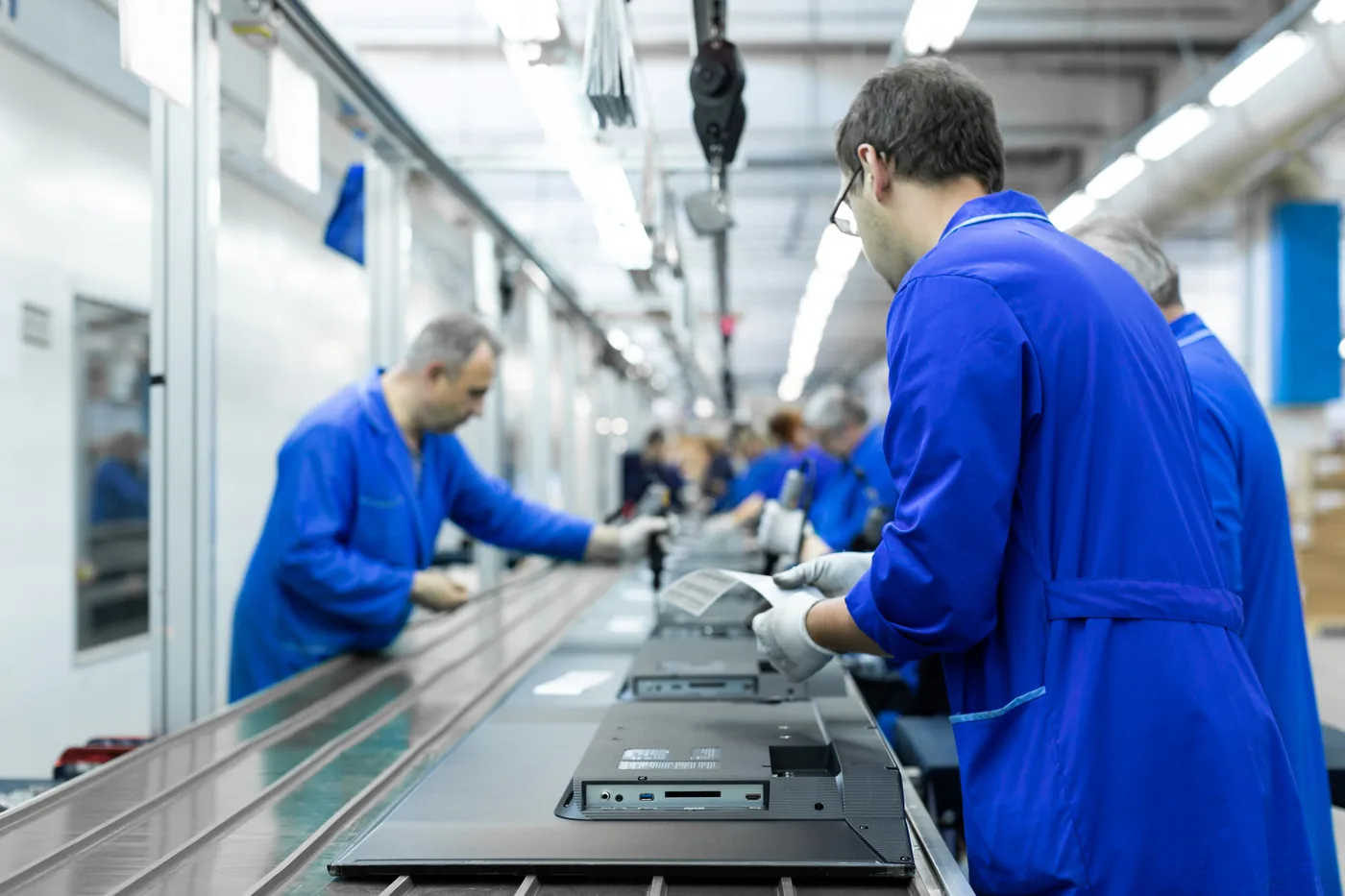
Operators along an assembly line
  • Gives you a snapshot of a handful of stations. Operator Vision runs continuously across all of them, with nobody standing there changing the number.

FAQ

Questions your team will ask

  • Two weeks from the day you send work instructions, on a station with one operator. Where several people work the same bench, plan for closer to three. Stations after the first go up in parallel, so a twenty-station rollout takes weeks rather than twenty times as long. Assembler AI supplies and provisions the camera kit, and nothing about the line has to change.